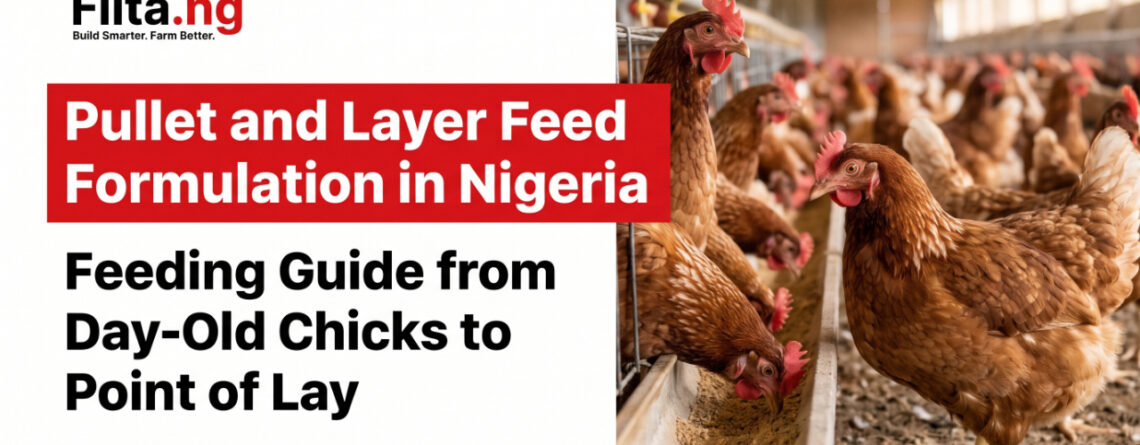
This article will cover the feeding journey of ISA Brown pullets, from day-old chicks until they mature and begin laying eggs.
The calculations are based on a feeding plan originally prepared for a customer who purchased five cartons of ISA Brown pullets, approximately 250 birds.
As the birds grow, their feed consumption increases. Therefore, rather than using the same quantity of feed throughout, we have broken the feeding programme into five stages.
The formulations below are standardised to 50kg batches to make them easier for farmers to reproduce. The larger quantities in the original plan are retained as approximate flock-level production estimates, subject to actual feed consumption.
1. Pre-chick crumble (0–4 weeks)
During the first four weeks, chicks require a nutritious starter diet to support early growth, feather development and healthy body development.
50kg formulation
| Ingredient |
Quantity |
| Maize |
25.59kg |
| Soybean meal |
13.86kg |
| Fish meal (72% CP) |
2.13kg |
| Wheat bran |
5.33kg |
| Bone meal |
1.28kg |
| Limestone |
1.07kg |
| Premix |
0.13kg |
| Methionine |
0.09kg |
| Lysine |
0.06kg |
| Enzyme |
0.17kg |
| Vitamin C |
0.06kg |
| Binder |
0.13kg |
| Salt |
0.11kg |
Estimated production cost:
2. Chick crumble (4–8 weeks)
At this stage, the chicks are growing and their nutritional requirements begin to change. The diet continues to provide protein and energy to support healthy development.
50kg formulation
| Ingredient |
Quantity |
| Maize |
26.48kg |
| Soybean meal |
11.20kg |
| PKC/GNC |
4.07kg |
| Wheat bran |
5.09kg |
| Bone meal |
1.22kg |
| Limestone |
1.22kg |
| Premix |
0.12kg |
| Methionine |
0.08kg |
| Lysine |
0.06kg |
| Enzyme |
0.16kg |
| Vitamin C |
0.06kg |
| Binder |
0.12kg |
| Salt |
0.10kg |
Estimated production cost:
3. Grower mash/pellets (8–18 weeks)
The grower stage is important for developing strong, healthy pullets.
The objective is to support steady growth without encouraging excessive weight gain before the birds reach maturity.
50kg formulation
| Ingredient |
Quantity |
| Maize |
22.04kg |
| Wheat bran |
12.02kg |
| Soybean meal |
8.02kg |
| PKC/GNC |
3.01kg |
| Cassava meal |
1.50kg |
| Bone meal |
1.50kg |
| Limestone |
1.20kg |
| Premix |
0.13kg |
| Methionine |
0.08kg |
| Lysine |
0.05kg |
| Enzyme |
0.15kg |
| Vitamin C |
0.08kg |
| Binder |
0.10kg |
| Salt |
0.13kg |
Estimated production cost:
4. Pre-layer mash (16–18 weeks)
The pre-layer stage prepares pullets for egg production.
At this stage, calcium requirements begin to increase as the birds approach sexual maturity. However, the transition to a layer diet should be guided by the breed's body weight, maturity and onset of lay.
50kg formulation
| Ingredient |
Quantity |
| Maize |
21.13kg |
| Wheat bran |
10.06kg |
| Soybean meal |
7.04kg |
| PKC/GNC |
2.52kg |
| Cassava meal |
1.51kg |
| Bone meal |
2.52kg |
| Limestone |
4.53kg |
| Premix |
0.13kg |
| Methionine |
0.08kg |
| Lysine |
0.05kg |
| Enzyme |
0.15kg |
| Vitamin C |
0.08kg |
| Binder |
0.10kg |
| Salt |
0.13kg |
Estimated production cost:
5. Layer pellets (18 weeks onwards)
Once the pullets reach the laying stage, their nutritional requirements change significantly.
Layer feed must provide adequate energy, protein, calcium and other essential nutrients to support egg production and eggshell formation.
50kg formulation
| Ingredient |
Quantity |
| Maize |
19.93kg |
| Wheat bran |
9.06kg |
| Soybean meal |
6.04kg |
| PKC/GNC |
2.72kg |
| Cassava meal |
1.51kg |
| Bone meal |
2.26kg |
| Limestone/Oyster shell |
7.85kg |
| Premix |
0.11kg |
| Methionine |
0.07kg |
| Lysine |
0.05kg |
| Enzyme |
0.14kg |
| Vitamin C |
0.07kg |
| Binder |
0.09kg |
| Salt |
0.11kg |
Estimated production cost:
6. Summary of feed formulation costs
Here is a comparison of the estimated production costs across the five stages.
| Feeding stage |
Cost per 50kg |
Cost per kg |
| Pre-chick |
₦45,779 |
₦915.58 |
| Chick |
₦30,464 |
₦609.28 |
| Grower |
₦28,878 |
₦577.56 |
| Pre-layer |
₦27,279 |
₦545.58 |
| Layer |
₦25,423 |
₦508.46 |
Estimated cost per 50kg
Cost of producing feed at each pullet growth stage, including milling.
₦0₦15,000₦30,000₦45,000₦60,000Pre-chickChickGrowerPre-layerLayer
These are estimates based on the supplied ingredient prices. Actual prices may vary by supplier, location and purchase quantity.
7. How much feed will 250 ISA Brown pullets require?
The original feeding plan was prepared around approximately 250 birds. It anticipated increasing feed quantities as the birds matured.
| Feeding stage |
Original planned quantity |
| Pre-chick |
Approximately 250kg |
| Chick |
Approximately 250kg |
| Grower |
Approximately 500kg |
| Pre-layer |
Approximately 500kg |
| Layer |
Approximately 1,500kg |
These are the original planning quantities, not guaranteed consumption figures. The final layer-stage quantity needs particular attention because the ingredients in the supplied calculation actually total 1,656kg.
Farmers should monitor feed consumption, bird weights, mortality and wastage to determine how much feed to produce or purchase at each stage.
8. Important tips for feeding ISA Brown pullets
-
Provide clean drinking water at all times.
-
Avoid sudden changes in feed formulation.
-
Ensure feed ingredients are properly stored to prevent mould and contamination.
-
Monitor body weight regularly and compare it with the ISA Brown breed management targets.
-
Do not introduce high-calcium layer feed too early.
-
Maintain proper vaccination, hygiene and biosecurity practices.
A note on the formulations: These are costed formulations adapted from the original customer calculation. They have not been independently validated for nutritional adequacy. A qualified poultry nutritionist should check crude protein, metabolizable energy, calcium, available phosphorus, amino acids and premix inclusion before they are used as feeding recommendations.
Conclusion
Raising pullets successfully requires proper feeding and management at every stage of development.
Understanding feed ingredients, quantities and production costs helps farmers plan ahead, control expenses and prepare for commercial egg production.
At Filta.ng, we want to make it easier for Nigerian farmers to access agricultural inputs and practical information that supports their businesses.
Filta.ng – Build Smarter. Farm Better.