24
Nov
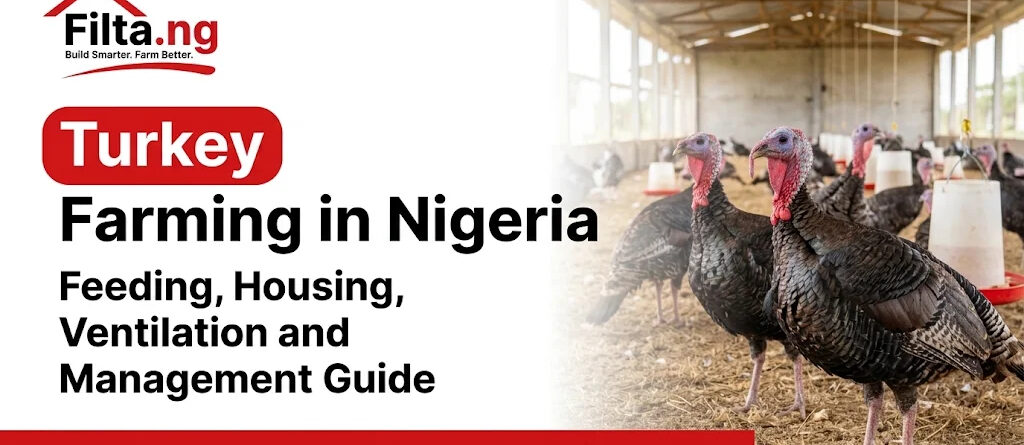
Turkey Farming in Nigeria: Feeding, Housing, Ventilation and Management Guide
Turkey farming is an interesting livestock business in Nigeria, offering opportunities for meat production, breeding and commercial poultry farming.
However, raising turkeys successfully requires proper management, particularly during the early stages of growth. Turkey poults need adequate nutrition, clean drinking water, good ventilation and a hygienic environment to develop properly.
In this guide, we explore important turkey farming practices, including feeding, protein requirements, housing, ventilation and general health management.
The recommendations also incorporate practical insights from an experienced Nigerian turkey farmer.
The exact requirements depend on the turkey breed, sex, growth objectives and feeding programme.
Why is protein important?
Protein supports:
1. Proper Feeding and Nutrition
Feeding is one of the most important aspects of turkey production. Unlike some other poultry birds, turkeys require carefully managed diets with adequate protein, energy, vitamins and minerals, particularly during their early growth stages. As turkeys mature, their nutritional requirements change. Therefore, farmers should adjust their feeding programme according to the birds' age and development.Turkey Feed and Protein Requirements
A general feeding programme can be divided into the following stages:| Feeding stage | Age | Approximate crude protein |
|---|---|---|
| Starter | 0–6 weeks | 26–28% |
| Grower | 7–12 weeks | 20–23% |
| Developer | 13–16 weeks | 18–21% |
| Finisher | 17 weeks to market | 16–18% |
- Muscle development and body growth.
- Feather development.
- Tissue repair.
- General development and productivity.
Using Full-Fat Soya in Turkey Feed
Full-fat soya is an ingredient farmers can consider when formulating turkey feed. It provides plant protein and energy from its natural oil content, making it useful in poultry nutrition. However, full-fat soya must be properly heat-treated before use. Raw or inadequately processed soybeans contain antinutritional factors that can interfere with digestion and nutrient utilisation. Its inclusion should also be balanced with other ingredients to ensure that the finished feed meets the birds' nutritional requirements.2. Provide Clean Drinking Water
Clean water is essential for healthy turkey production. Turkeys need continuous access to fresh drinking water for digestion, nutrient absorption, temperature regulation and general body functions. Farmers should:- Provide clean water throughout the day.
- Wash and disinfect drinkers regularly.
- Prevent droppings, feed particles and dirt from contaminating drinking water.
- Ensure that water containers are accessible to all birds.
- Check water supply frequently, especially during hot weather.
3. Proper Ventilation
Good ventilation is another important requirement in turkey farming. Turkey houses should allow sufficient movement of fresh air while protecting the birds from excessive wind, rain and harsh weather. Proper ventilation helps remove:- Excess moisture.
- Heat.
- Dust.
- Ammonia from accumulated droppings.
- Other harmful gases.
4. Maintain a Clean and Hygienic Environment
Cleanliness is essential for preventing disease outbreaks and maintaining healthy birds. Turkey houses should be cleaned regularly, and wet or contaminated litter should be removed and replaced. Important hygiene practices include:- Clean feeders and drinkers regularly.
- Remove wet litter and accumulated droppings.
- Disinfect housing and equipment between batches.
- Prevent rodents and wild birds from entering the turkey house.
- Restrict unnecessary visitors.
- Maintain proper drainage around the poultry house.
- Avoid overcrowding.
5. Disease Prevention and Medication
Disease prevention should be part of every turkey farming programme. Turkeys can be affected by different poultry diseases, and some infections can spread quickly through a flock. Farmers should work with a qualified veterinarian to develop an appropriate vaccination, parasite-control and health-management programme. Important practices include:- Purchase healthy poults from reputable hatcheries.
- Follow recommended vaccination schedules.
- Isolate sick birds when necessary.
- Observe birds regularly for unusual behaviour.
- Avoid administering antibiotics or other drugs without professional guidance.
- Maintain proper biosecurity.
6. Provide Appropriate Housing and Space
Turkey housing should provide sufficient space for movement, feeding and resting. Overcrowding can increase stress, competition for feed and water, litter contamination and disease transmission. The housing arrangement should consider:- The age and size of the birds.
- The number of turkeys being raised.
- Ventilation requirements.
- Feeder and drinker availability.
- Protection from predators.
- Access to dry and comfortable litter.
7. Monitor Growth and Feed Consumption
Farmers should monitor the development of their turkeys regularly. Keeping simple farm records can help identify problems early and improve production decisions. Some useful records include:- Number of birds purchased.
- Daily or weekly mortality.
- Feed purchased and consumed.
- Vaccinations and medication.
- Weekly body weight.
- Production expenses.
- Final market weight and selling price.
8. Practical Advice from an Experienced Turkey Farmer
Based on practical insights shared by an experienced turkey farmer, the following five areas deserve particular attention:- Ventilation: Ensure the turkey house has adequate airflow.
- Clean water: Always provide fresh and uncontaminated drinking water.
- Proper health management: Follow appropriate veterinary and vaccination programmes.
- Cleanliness: Maintain a hygienic housing environment.
- Good nutrition: Provide high-quality, protein-appropriate feed during each growth stage, adjusting the formulation as the birds mature.
Conclusion
Successful turkey farming requires more than purchasing poults and providing feed. Farmers must pay attention to nutrition, ventilation, clean water, hygiene, housing and disease prevention. Providing adequate protein during early growth, using quality ingredients such as properly processed full-fat soya and adjusting feed as the birds mature can support healthy development. For anyone planning to venture into turkey farming in Nigeria, proper preparation and consistent management are essential. At Filta.ng, we aim to provide practical agricultural information and help Nigerian farmers access essential farming inputs. Filta.ng – Build Smarter. Farm Better.
Share: