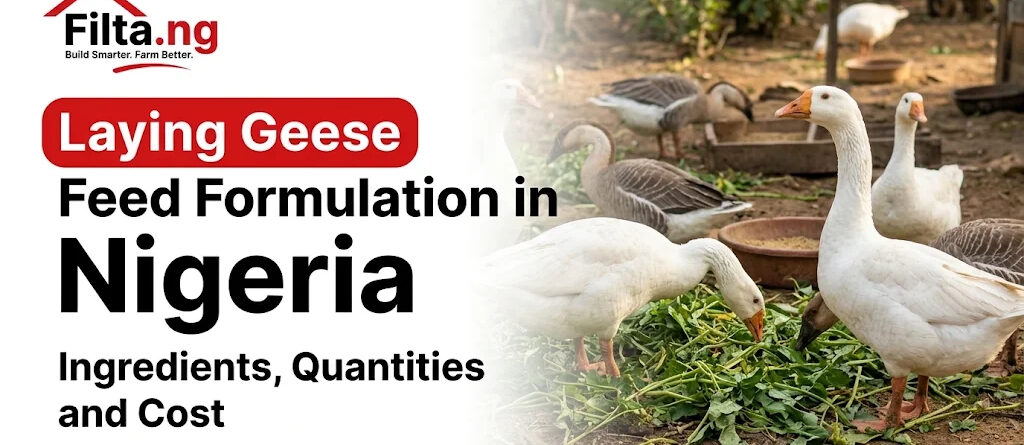
Geese farming can be a rewarding agricultural venture, particularly for farmers interested in breeding, egg production and the commercial production of geese.
However, feeding laying geese requires proper nutritional planning. Birds need an appropriate balance of protein, energy, vitamins and minerals to maintain good body condition, support egg production and produce healthy eggs.
In this guide, we share a practical feed formulation for laying imported geese, including the ingredients, quantities and estimated cost of production in Nigeria.
1. Ingredients Required for Laying Geese Feed
The following ingredients are included in this formulation:
- DL Methionine
- L-Lysine
- Vitamin C
- Egg Booster
- Oyster Shell
- Bone Meal
- Palm Kernel Cake (PKC)
- Wheat Bran
- Full Fat Soya Meal
- Fish Meal (72% Crude Protein)
- Limestone
- Groundnut Cake (GNC)
- Dicalcium Phosphate (DCP)
- Feed Binder
- Animal Salt
- Molasses
- Rice Bran
These ingredients contribute different nutrients to the diet. Maize-free cereal by-products and oilseed ingredients provide energy and protein, while fish meal and soya contribute additional protein. Calcium sources such as oyster shell and limestone are included to support eggshell formation.
2. Laying Geese Feed Formulation and Cost
Below is the ingredient breakdown for the formulation.
| Ingredient |
Quantity |
Unit Price |
Total |
| DL Methionine |
1kg |
₦8,700 |
₦8,700 |
| L-Lysine |
1kg |
₦4,200 |
₦4,200 |
| Vitamin C |
1kg |
₦4,700 |
₦4,700 |
| Egg Booster |
2kg |
₦5,000 |
₦10,000 |
| Oyster Shell |
5kg |
₦400 |
₦2,000 |
| Bone Meal |
5kg |
₦350 |
₦1,750 |
| PKC |
5kg |
₦320 |
₦1,600 |
| Wheat Bran |
5kg |
₦480 |
₦2,400 |
| Full Fat Soya Meal |
5kg |
₦1,470 |
₦7,350 |
| Fish Meal (72%) |
2kg |
₦6,800 |
₦13,600 |
| Limestone |
5kg |
₦100 |
₦500 |
| GNC |
2kg |
₦750 |
₦1,500 |
| Dicalcium Phosphate |
1kg |
₦2,800 |
₦2,800 |
| Feed Binder |
1kg |
₦2,800 |
₦2,800 |
| Animal Salt |
1kg |
₦420 |
₦420 |
| Molasses |
2kg |
₦750 |
₦1,500 |
| Rice Bran |
5kg |
₦350 |
₦1,750 |
| Total Ingredients |
49kg |
|
₦67,570 |
3. Additional Production Costs
Apart from the ingredients, there are additional costs involved in preparing and packaging the feed.
| Description |
Cost |
| Milling (49kg × ₦25) |
₦1,225 |
| Sack |
₦1,000 |
| Molasses container |
₦1,500 |
| Total Additional Costs |
₦3,725 |
Total Cost of Production
- Ingredient cost: ₦67,570
- Milling and packaging: ₦3,725
Total estimated production cost: ₦71,295
The cost per kilogram, including the additional production costs, is approximately ₦1,455.
These prices are based on the supplied ingredient quotations and may vary depending on the supplier, location and market conditions.
4. Why Are These Ingredients Important?
Understanding the nutritional purpose of each ingredient helps farmers appreciate the importance of balanced feeding.
Protein and energy sources
- Full Fat Soya Meal: Provides plant protein and energy.
- Fish Meal: Supplies animal protein and essential amino acids.
- Groundnut Cake: Contributes additional protein.
- PKC: Provides fibre and energy.
- Wheat Bran and Rice Bran: Supply fibre and other nutrients.
- Molasses: Provides readily available energy and improves feed palatability.
Calcium and mineral sources
- Oyster Shell: A calcium source that supports eggshell formation.
- Limestone: Supplies calcium.
- Bone Meal: Provides calcium and phosphorus.
- Dicalcium Phosphate: Supplies phosphorus and calcium.
- Animal Salt: Supplies sodium and chloride.
Other nutritional supplements
- DL Methionine and L-Lysine: Supply essential amino acids.
- Vitamin C: Provides vitamin supplementation.
- Egg Booster: A supplementary product intended to support the laying diet.
- Feed Binder: Helps bind feed particles during processing.
5. Important Feeding Considerations for Laying Geese
Feeding laying geese requires more than providing formulated feed.
Farmers should consider the following:
- Clean drinking water: Geese require constant access to clean water. Water is also important for normal feeding behaviour.
- Forage and grazing: Geese naturally graze and can benefit from suitable green vegetation as part of a balanced feeding programme.
- Calcium requirements: Laying birds require adequate calcium to support eggshell production.
- Feed quality: Avoid mouldy, contaminated or poorly stored ingredients.
- Consistent feeding: Maintain a regular feeding routine and monitor body condition and egg production.
- Breeding management: Nutrition should be appropriate for the breed, age, laying stage and reproductive condition.
Important nutritional note: This is a costed formulation supplied for commercial feed planning. It has not been independently validated as a complete ration for laying geese. Before using it, consult a qualified poultry nutritionist with experience in waterfowl. In particular, the combined inclusion of oyster shell, limestone, bone meal and DCP, as well as the Egg Booster and amino acid inclusion rates, should be reviewed for nutritional balance and product specifications.
6. Conclusion
Proper feeding is an important part of successful goose production, particularly when raising imported breeds for egg production.
Using quality ingredients, maintaining good feeding practices and monitoring production costs can help farmers manage their operations more effectively.
At Filta.ng, we aim to provide Nigerian farmers with practical agricultural information and access to essential farming inputs.
Whether you are raising poultry, geese, goats, cattle or other livestock, understanding animal nutrition is an important step towards better farm management.
Filta.ng – Build Smarter. Farm Better.